Book directly with Ladakh Taxi for best rates

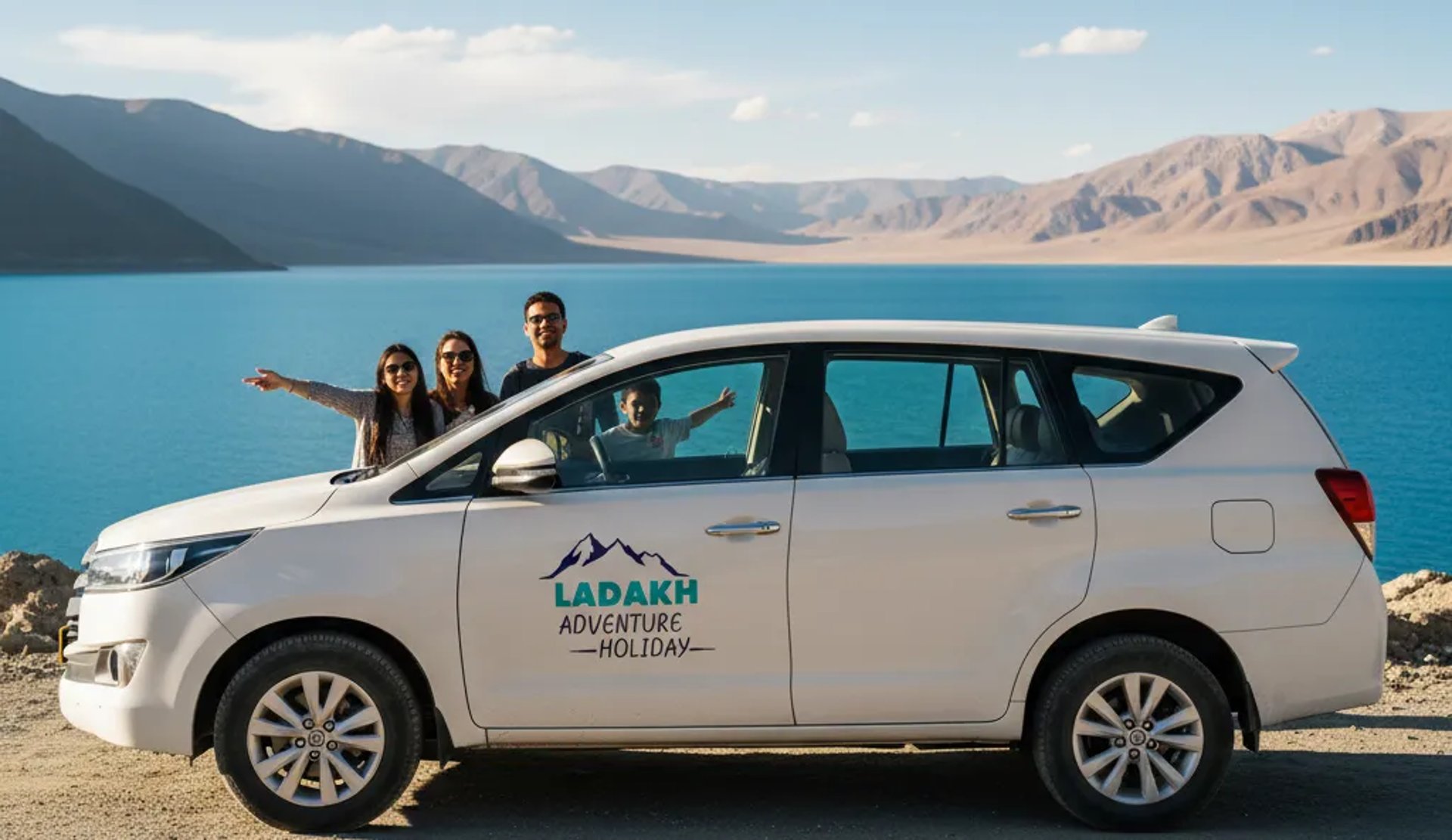
Visiting destinations like Ladakh can be thrilling, but it also presents significant challenges due to the limited information available online; only a knowledgeable local can provide you with the authentic details. Below is a compilation of commonly asked questions regarding Ladakh taxi rates 2026 and other Ladakh tour related questions.
FAQs - Ladakh taxi and Tour
1. What is the best time to visit Ladakh?
The peak tourist season is from May to September, when roads from Manali and Srinagar are open and the weather is pleasant (15°C to 30°C). For winter enthusiasts, January to March is ideal for the Chadar Trek or snow leopard expeditions, though temperatures can drop to -20°C.
2. How many days are ideal for a Ladakh trip?
A minimum of 7 to 10 days is recommended to cover major circuits like Leh, Nubra Valley, and Pangong Tso. This duration includes the mandatory 48-hour rest period required for high-altitude acclimatization upon arrival in Leh.
3. What is Acute Mountain Sickness (AMS) and how can I prevent it?
AMS is a condition caused by low oxygen levels at high altitudes (above 10,000 ft).1 Prevention includes resting for the first two days, drinking 3–4 liters of water daily, avoiding alcohol/smoking, and consulting a doctor about prophylactic medication like Acetazolamide (Diamox).
4. Do Indian tourists need permits for Ladakh?
Yes. While the traditional "Inner Line Permit" has been largely replaced by a Ladakh Environment Fee for domestic tourists, you still need to pay this online (₹400 one-time fee plus ₹20 per day wildlife fee) to visit restricted areas like Nubra, Pangong, and Hanle.
5. What are the requirements for foreign travelers?
Foreign nationals must obtain a Protected Area Permit (PAP) to visit border regions. This usually requires a group of at least two people and must be processed through a registered travel agent in Leh.7 Citizens of certain countries (e.g., Pakistan, China, Afghanistan) require prior clearance from the Ministry of Home Affairs.
6. How can I reach Leh by road and air?
You can fly into Kushok Bakula Rimpochee Airport in Leh from major Indian cities.2 By road, there are two main routes: the Srinagar-Leh Highway (NH1), typically opening in May, and the Manali-Leh Highway, which opens in late May or June via the Atal Tunnel.
7. Will my mobile SIM card work in Ladakh?
Only postpaid SIM cards from outside Jammu & Kashmir and Ladakh will function.13 Prepaid cards from other states are blocked for security reasons.15 BSNL offers the widest coverage in remote areas, while Airtel and Jio provide 4G/5G in Leh and parts of Nubra Valley.
8. Is Ladakh safe for solo female travelers?
Ladakh is considered one of the safest regions in India for solo travelers, with very low crime rates and a welcoming local culture. However, it is advised to avoid remote trekking alone and to keep someone informed of your daily itinerary.
9. What kind of clothes should I pack?
Layering is essential because temperatures fluctuate dramatically between day and night. Essential items include thermals, a fleece jacket, a heavy windproof down jacket, woolen socks, gloves, and UV-protected sunglasses.
10. What are the best bikes to rent for a Ladakh road trip?
The Royal Enfield Himalayan (411cc or 450cc) is the most popular choice due to its terrain suitability.17 Rental rates in 2025 range from ₹1,500 to ₹3,500 per day, depending on the model and condition.
11. How much does a typical 1-week trip cost?
Excluding airfare, a mid-range trip costs approximately ₹30,000 to ₹45,000 per person. This includes accommodation, a dedicated taxi for the circuit, permits, and meals. Costs vary significantly based on whether you choose budget homestays or luxury retreats.
12. Are ATMs and digital payments widely available?
ATMs are readily available only in Leh market; banking services are sparse in remote valleys.2 While digital payments are increasing in Leh, regions like Pangong Tso, Nubra, and Hanle remain cash-only economies due to unreliable network connectivity.
13. Can I fly a drone in Ladakh?
As of 2025, the Ladakh administration has banned the flying of drones/UAVs in Leh and Kargil districts due to security concerns near sensitive border areas. Unauthorized usage can lead to equipment confiscation and heavy legal penalties.
14. Is it safe to visit Ladakh during the monsoon?
Yes, Ladakh is in a rain shadow zone and receives very little rainfall.1 However, entry routes through Himachal Pradesh or Kashmir can be risky during July and August due to landslides and flash floods on the approach highways.
15. What are the must-try local foods?
Traditional Ladakhi cuisine is a highlight of the trip. Must-tries include Thukpa (noodle soup), Momos, Skyu (wheat-based stew), Pava (roasted barley flour), and the unique Butter Tea (Gur-Gur Chai).
FAQs for Ladakh Taxi
Q: Are Ladakh Taxi Rates fixed or can I negotiate?
A: In Ladakh, taxi rates are strictly regulated by the Ladakh Taxi Union. We adhere to the official 2025/2026 rate list to ensure transparency. While the base rates for specific points are fixed, we may offer discounts for long-duration multi-day bookings or during the shoulder seasons (April or October).
Q: What is included in the taxi fare?
A: Our quoted Ladakh Taxi Rates include the vehicle rental, fuel, and the driver’s salary/allowance. Please note that parking fees, monastery entry fees, and personal expenses are typically extra.
Q: Can I book a taxi for multiple days?
A: Yes! Most travellers prefer multi-day "circuits" (e.g., Leh-Nubra-Pangong-Leh). We specialise in custom itineraries. You will have the same dedicated vehicle and professional driver for the duration of your tour.
Q: Which vehicles are best for Ladakh's terrain?
A: For mountain roads and high passes like Khardung La, we recommend SUVs such as the Toyota Innova, Mahindra Xylo, or Scorpio. For larger groups (8–12 people), a Tempo Traveller is the most cost-effective and comfortable option.
FAQs for Health Advisory and Acclimatization
Comprehensive Health & Altitude Safety Advisory for Leh-Ladakh
Welcome to the Land of High Passes. To ensure your visit to Ladakh is safe, enjoyable, and free from medical complications, all travelers must strictly adhere to the following medical protocols. Leh is situated at an approximate altitude of 3,500 meters (11,500 feet), where oxygen levels are significantly lower than at sea level. Knowing the current Ladakh taxi rates and planning your travel accordingly is essential for a stress-free and healthy trip.
1. The Golden Rule: Compulsory Acclimatization
Mandatory 48-Hour Rest Period Upon arrival in Leh, you must undergo a minimum of 48 hours of complete acclimatization before attempting to travel to higher passes (such as Khardung La or Chang La) or high-altitude lakes (Pangong Tso or Tso Moriri). When checking Ladakh taxi rates for sightseeing, ensure your itinerary factors in these two days of stationary rest.
The Road Travel Fallacy: Many believe that traveling by road from Manali or Srinagar provides natural acclimatization. In reality, road travel often builds up the "altitude effect" progressively and causes physical fatigue. Even if you arrive by road, the 48-hour rest rule in Leh remains mandatory.
Activity Restriction: During the first two days, avoid any active physical exertion. This includes trekking, long walks, or carrying heavy luggage. Your body requires this time to increase its red blood cell count and adjust its respiratory rate.
2. Pharmacological Preparation (Acetazolamide/Diamox)
To assist your body in adapting to the decreased oxygen pressure, it is recommended to follow a preventative medication course:
Dosage: Tablet Diamox (250mg) should be taken twice daily (after breakfast and after dinner).
Timeline: Begin the course two days before you depart for Leh and continue the medication for at least two days after your arrival.
Consultation: Always consult your physician before starting Diamox, especially if you have a known allergy to sulfa drugs.
3. Hydration, Nutrition, and Lifestyle
Maintaining your body's chemistry is vital at high altitudes:
Fluid Intake: Drink at least 2–3 liters of water per day. High altitude causes rapid dehydration through breathing and perspiration.
Dietary Choices: On your first day, consume only light, easily digestible meals. The digestive system slows down at high altitudes; heavy or oily food can lead to nausea and indigestion.
Strict Prohibitions: * Alcohol & Smoking: Avoid these entirely. Alcohol dehydrates the body and suppresses breathing, while smoking further reduces oxygen intake.
Sedatives: Avoid sleeping pills or sedatives, as they can dangerously depress your respiratory drive during sleep.
4. Recognising Danger Signs: Acute Mountain Sickness (AMS)
Monitor yourself and your companions for the following symptoms. If they persist or worsen, seek medical attention immediately. While monitoring Ladakh taxi rates for your excursions, prioritise your health over your travel schedule:
Primary Symptoms: Persistent headache, nausea, and loss of appetite.
Neurological Signs: Lack of concentration, lassitude (extreme fatigue), and disturbed sleep patterns.
Respiratory Signs: Irregular breathing, breathlessness even while resting, and a persistent dry cough.
5. Critical Emergencies: HAPE and HACE
High-Altitude Pulmonary Edema (HAPE) and High-Altitude Cerebral Edema (HACE) are advanced, life-threatening stages of altitude sickness.
HAPE (Fluid in Lungs): Characterised by extreme breathlessness, a cough that produces frothy/pink sputum, and blue-tinted lips or fingernails.
HACE (Swelling of the Brain): Characterized by severe confusion, hallucinations, and "ataxia" (loss of physical coordination/staggering as if drunk).
Action: These conditions can be fatal within hours. Immediate descent to a lower altitude and professional medical intervention are the only cures.
6. Daily Precautions
Daytime Rest: Avoid excessive sleep during the day, as breathing rates naturally slow down during sleep, which can hinder the acclimatization process.
Stay Warm: Protect yourself against the wind and cold to prevent your body from using extra energy to maintain its core temperature.
7. Emergency Contact Directory
If you or anyone in your group exhibits "Danger Signs," do not wait for the symptoms to disappear. Contact medical authorities immediately. If you need to rush to a hospital, standard Ladakh taxi rates usually apply for emergency transfers:
Department & Telephone Number
CMO Office, Leh - 01982-252012
Medical Superintendent, SNM Hospital - 01982-252014
Casualty Ward, SNM Hospital (24/7) - 01982-053629
Disclaimer: This advisory is for informational purposes. Always prioritise the advice of on-site medical professionals and local authorities.